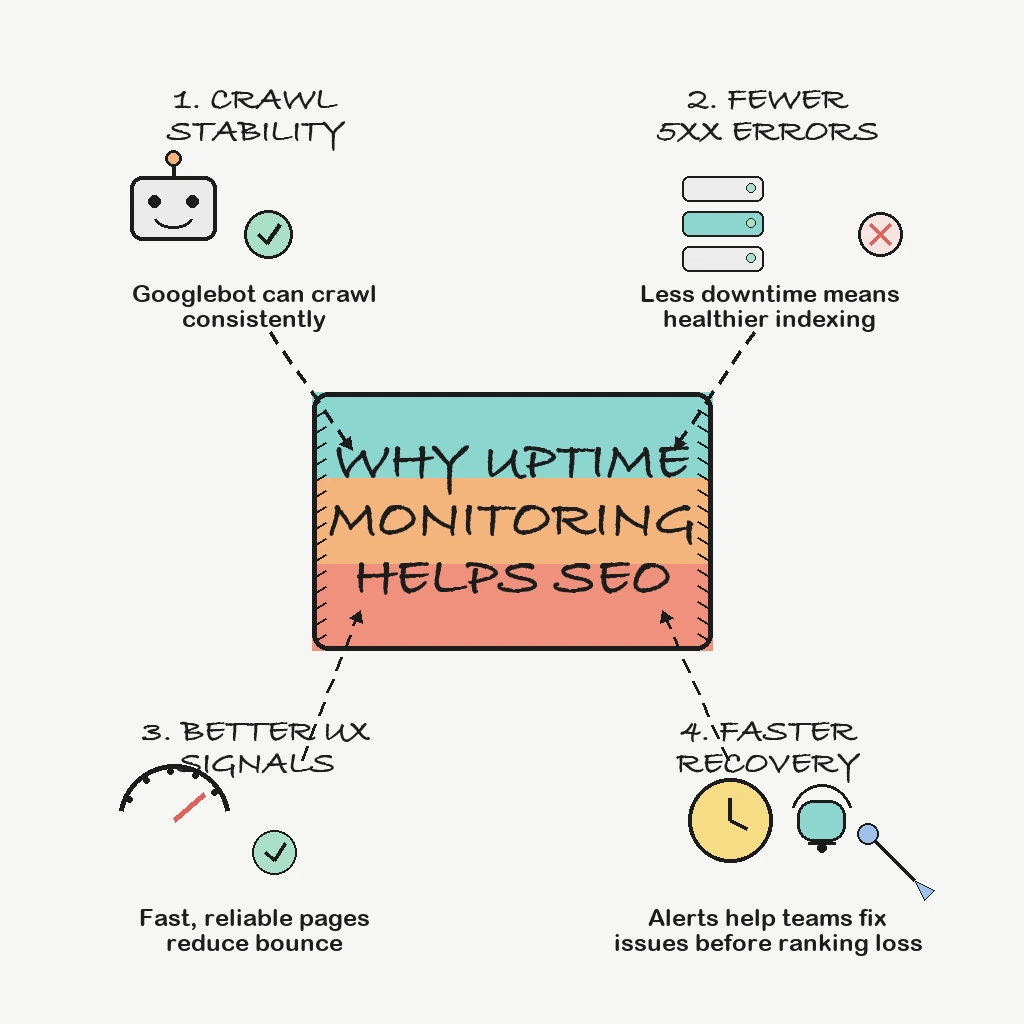
Uptime monitoring is important for SEO because search engines reward reliable websites and degrade visibility for sites that fail frequently. If Googlebot hits repeated server errors, slow pages, or timeouts, indexing quality can drop and rankings can follow.
This guide explains the SEO impact of downtime and how continuous uptime monitoring helps protect traffic, conversions, and brand trust.
Why Downtime Hurts SEO
Search engines evaluate more than keywords. They also evaluate whether users can consistently access your pages.
- Crawl interruptions: If bots see repeated 5xx errors, they crawl less and discover updates more slowly.
- Indexing delays: New pages and content changes may take longer to index when reliability is inconsistent.
- Lost user signals: Downtime increases bounce rates and session abandonment, which can weaken quality signals over time.
- Revenue and trust loss: SEO traffic is less valuable if landing pages fail during critical conversion moments.
How Uptime Monitoring Helps SEO
Uptime monitoring improves SEO outcomes by reducing the duration and frequency of incidents.
- Detects outages fast: Real-time checks surface failures within minutes, so teams can recover before search crawlers repeatedly hit errors.
- Catches regional problems: Multi-location monitoring finds country- or ISP-specific failures that a single probe can miss.
- Reduces false alarms: Quorum-based alerting lowers noise so teams can focus on real incidents that impact users and bots.
- Supports SLA discipline: Monitoring reports help teams improve MTTR and maintain more stable site performance.
- Improves technical SEO hygiene: Alerting on downtime, response errors, and latency keeps core pages available during high-crawl periods.
What to Monitor for SEO Protection
For stronger SEO resilience, monitor these endpoints and signals:
- Homepage and top organic landing pages
- XML sitemap and
robots.txt - Category and product pages with high search demand
- API endpoints used by critical page rendering paths
- SSL certificate validity and renewal windows
- Response time thresholds for important templates
Reader Questions, Answered
Does downtime directly hurt Google rankings?
Short outages are usually tolerated, but frequent or prolonged outages can reduce crawling and lower visibility for impacted pages.
Is uptime monitoring a ranking factor?
Not as a direct labeled ranking factor, but uptime strongly influences crawlability, user experience, and availability, all of which affect SEO outcomes.
How quickly should teams respond to downtime for SEO?
The faster the better. In practice, teams should aim to detect in minutes and recover quickly to avoid repeated crawler failures and traffic loss.
Wrap Up
SEO performance depends on availability as much as content quality. Uptime monitoring gives your team early warning, faster recovery, and cleaner technical signals that help preserve rankings.
If SEO traffic matters to your business, uptime monitoring should be treated as a core part of your technical SEO stack.
Ready to improve reliability and protect search visibility without adding tool sprawl?
Related guides:
- How synthetic monitoring helps
- Status page best practices for customer trust
- Global website uptime monitoring