What is global website uptime monitoring, and why does it matter in 2026?
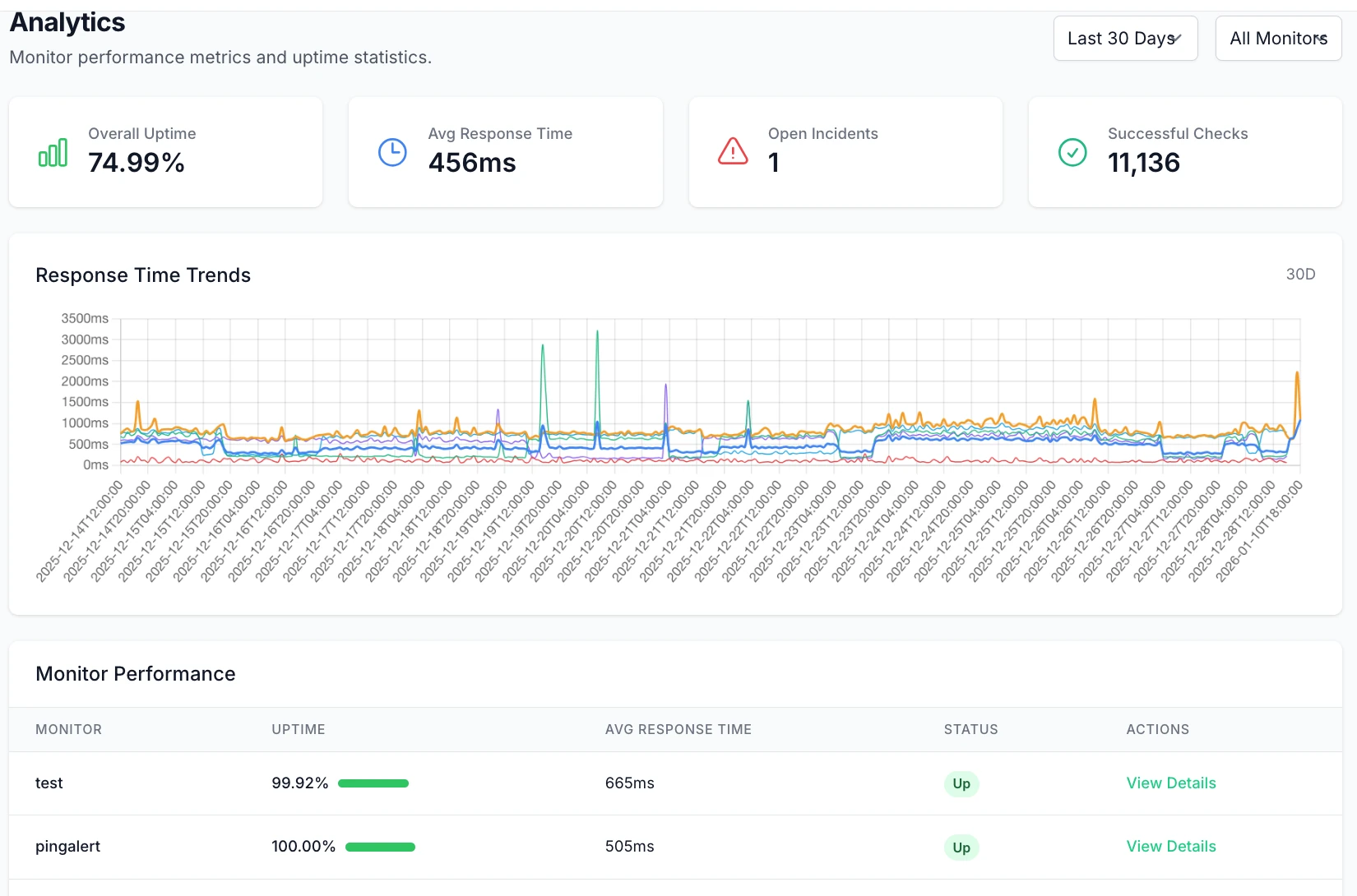
Global website uptime monitoring uses synthetic checks from locations worldwide to continuously verify if your site, API, or web service is available and performing well no matter where your users are. It goes beyond basic pings by simulating multi-step API requests (synthetic monitoring) to catch downtime, slow responses, SSL issues, or regional outages before customers notice.
In today's distributed world, a site that's "up" in one region but slow or inaccessible in another hurts revenue, SEO, and trust. PingAlert provides uptime monitoring that detects issues fast with global reach, reduces alert fatigue, and includes built-in status pages and incident management for seamless communication.
Why Choose PingAlert for Website Monitoring?
PingAlert combines powerful synthetic monitoring, multi-region checks, and modern incident tools — all in one platform trusted by teams and agencies.
- Global synthetic monitoring Run HTTP/HTTPS, API, keyword, TCP, ping, DNS, and SSL checks every 30 seconds from multiple continents for true worldwide visibility and percentile-based latency tracking.
- Noise-free uptime monitoring Quorum-based verification across regions eliminates false positives; only confirmed issues trigger alerts via Slack, PagerDuty, Teams, SMS, email, or webhooks.
- Beautiful branded status pages Create public or private status pages with custom domains, real-time incident timelines, historical uptime metrics, and subscriber notifications to build trust during outages.
- Powerful incident management Structured timelines with root-cause hints, dependency mapping, automatic follow-ups, and post-resolution summaries help teams resolve faster and prevent repeats.
- Agency multi-tenant monitoring Perfect for MSPs and agencies: isolated tenants, tenant dashboards, and scalable monitoring without managing separate instances.
Whether you're protecting strict SLOs, supporting client portfolios, or simply avoiding downtime surprises, PingAlert scales from solo devs to enterprise teams and agencies.
How Global Website Uptime Monitoring Works in PingAlert (3 Steps)
- Set up synthetic checks Add your URLs, APIs, or endpoints. Configure frequency, global regions, assertions (status codes, keywords, response time), and SLO targets. No agents or complex setup needed.
- Get intelligent alerts PingAlert verifies issues across regions before notifying — cutting noise so on-call engineers focus on real problems.
- Resolve and communicate Manage incidents in a clean timeline, post updates directly to your status page, share metrics with stakeholders, and let customers subscribe for automatic notifications.
Who Benefits from PingAlert's Uptime Monitoring?
- Engineering teams Fast detection and low-noise alerts keep rotations calm.
- Support & customer success Status pages reduce inbound tickets during incidents.
- Agencies & MSPs Agency multi-tenant monitoring lets you oversee dozens of clients securely from one dashboard.
- Businesses with global users Regional insights ensure consistent performance worldwide.
PingAlert delivers reliable website monitoring without the complexity or cost of legacy tools. Get started in under a minute, free trial available.
Ready to upgrade your uptime monitoring, synthetic monitoring, incident management, and status pages? Sign up today and monitor globally with confidence.
Reader Questions, Answered
Why is multi-region monitoring better than a single probe?
Single-location checks can miss regional outages or generate false alarms. Multi-region checks improve confidence by validating availability where your users actually are.
How frequently should global uptime checks run?
For critical user journeys, checks every 30 to 60 seconds are a practical baseline. Less critical endpoints can run on longer intervals based on SLA needs.
Is global uptime monitoring necessary for MSP and agency teams?
Yes. MSP and agency teams support clients with distributed user bases. Multi-region visibility helps prove SLA performance and catch location-specific issues early.
Wrap Up
Global-ready monitoring gives teams the visibility they need to protect customer experience and revenue across regions.
Ready to monitor globally and respond faster with less alert noise?
Related guides:
- How synthetic monitoring helps and why it matters
- Why uptime monitoring helps SEO
- Status page best practices for customer trust