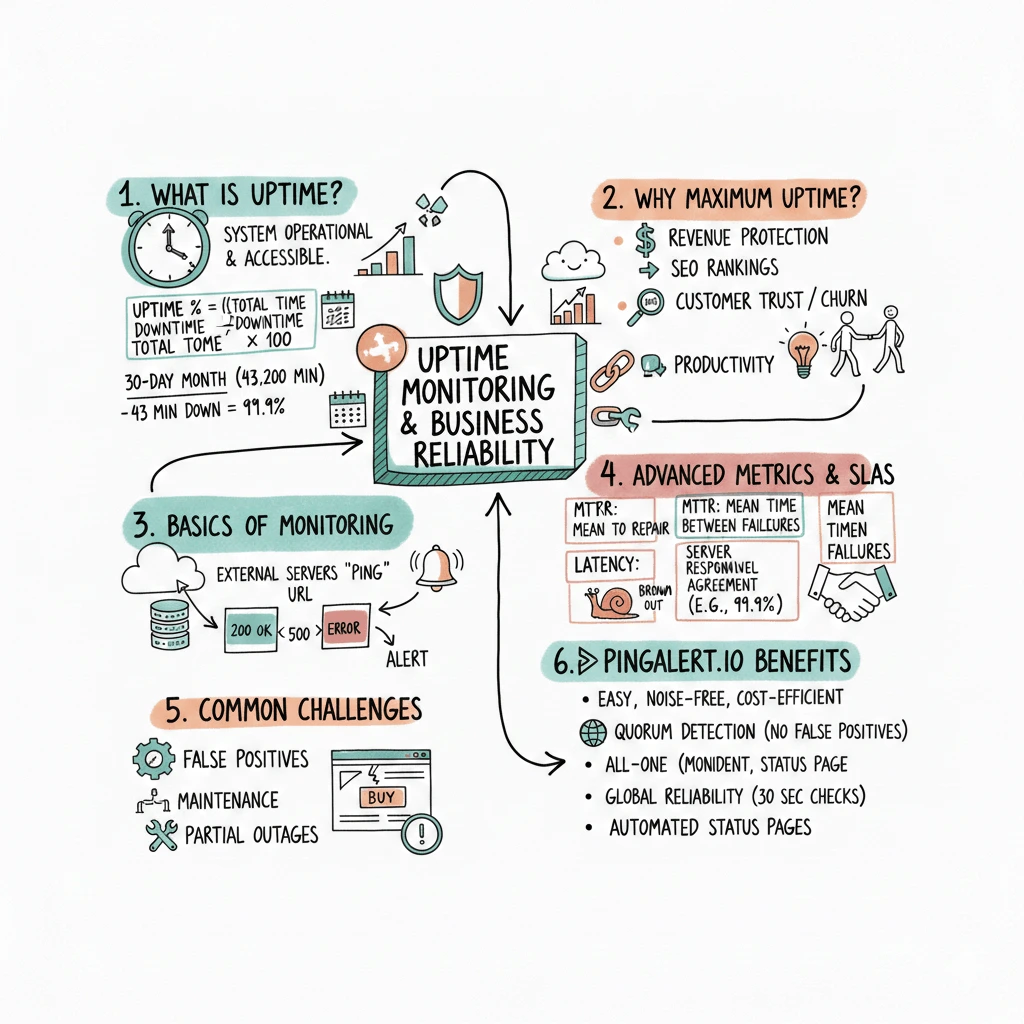
In the digital-first economy, your website or application is often your only storefront. When that storefront is locked, even for a few minutes, the consequences ripple across your entire business, from lost revenue to a tarnished reputation.
This guide breaks down the essentials of uptime and shows how to simplify your monitoring stack so reliability becomes a growth driver rather than a constant worry.
Why Maximum Uptime is Essential for Business
Uptime isn't just a technical metric; it's a business KPI. Here is why it matters:
- Revenue Protection For e-commerce or SaaS, downtime is a direct leak in your funnel. Every minute offline is a missed transaction.
- SEO Rankings Search engines like Google prioritize user experience. Frequent "5xx" errors can lead to a drop in search engine results page (SERP) rankings.
- Customer Trust & Churn Reliability builds brand equity. Conversely, frequent outages drive customers to seek out more stable competitors.
- Team Productivity When internal tools or APIs go down, your team's workflow halts, driving up operational costs and frustration.
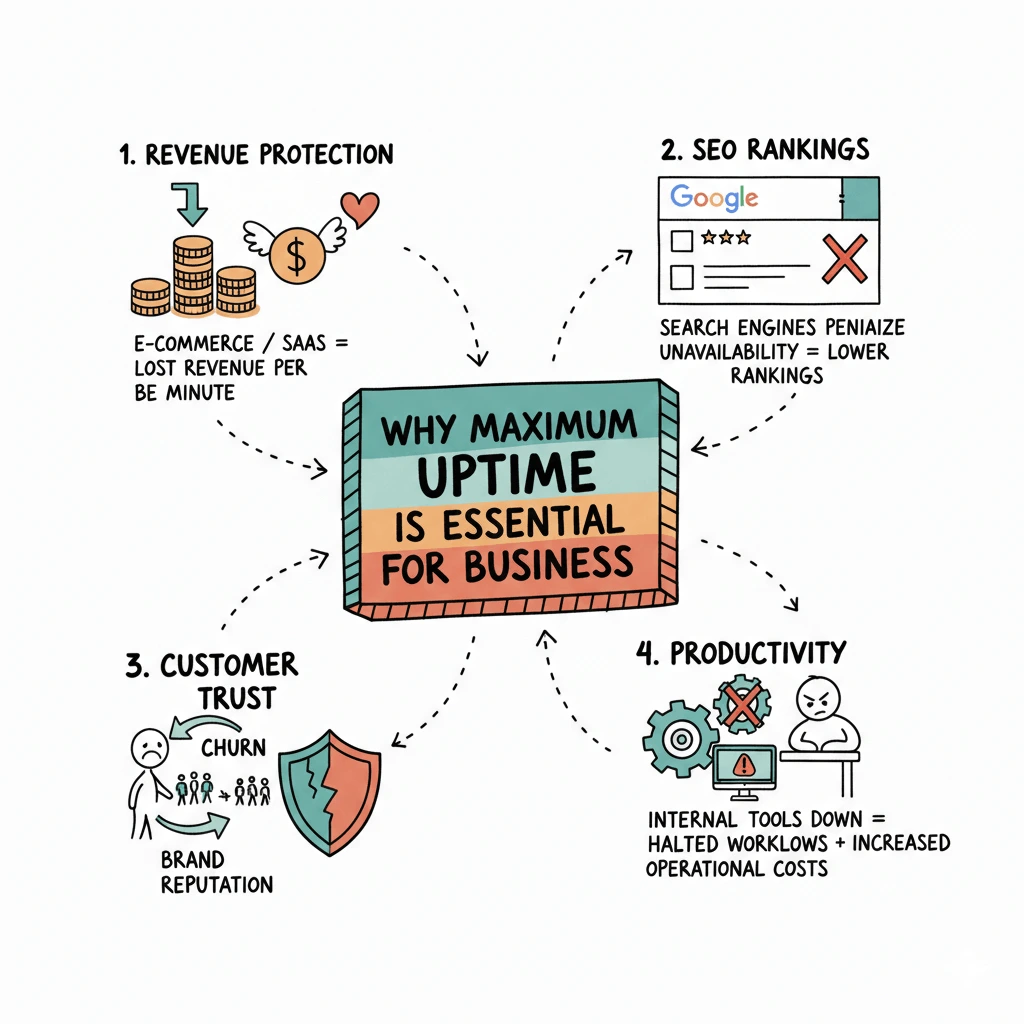
Downtime creates cascading effects across revenue, SEO, trust, and internal efficiency.
The Basics of Uptime Monitoring
Monitoring works by using external probes (servers located globally) to "ping" your URL at set intervals, usually every 30 to 60 seconds.
- The Check The monitor looks for a "200 OK" HTTP status code, confirming the server is responding correctly.
- The Alert If the monitor detects a timeout or an error code (like 500 or 503), it immediately triggers a notification via email, Slack, or SMS.
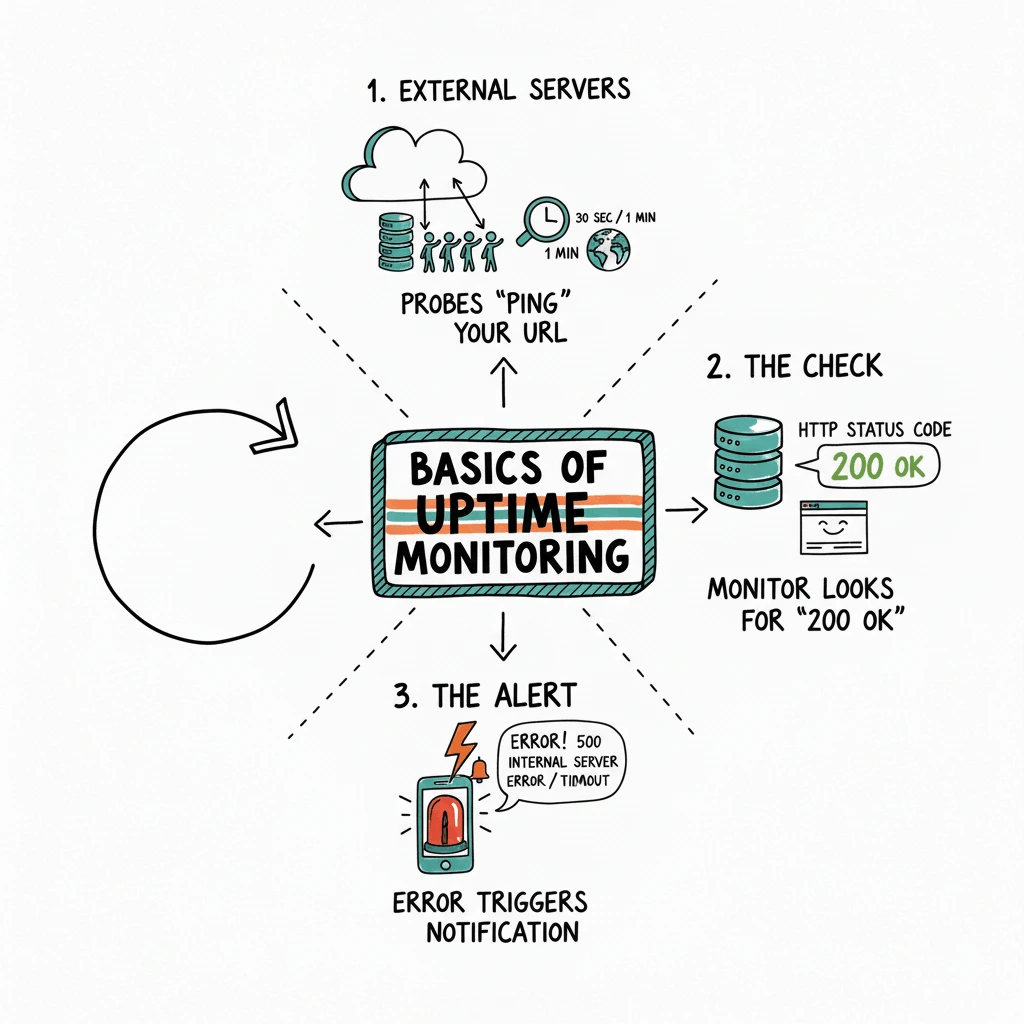
Basic checks for status and alerts are the foundation of uptime monitoring.
Advanced Metrics & SLAs
To truly master reliability, you need to look beyond a simple "up or down" status:
- MTTR (Mean Time to Repair) The average time it takes your team to recover from a failure.
- Latency Monitoring how fast your site responds. A "slow" site can be just as damaging as a "down" site (a "brownout").
- SLAs (Service Level Agreements) These are legal commitments to your customers regarding your minimum uptime. Missing these often results in financial penalties or service credits.
Common Challenges in Uptime Calculation
Even experienced teams run into these pitfalls:
- False Positives A single server in one region might fail while your site is actually fine. This creates "noise" and alert fatigue.
- Maintenance Windows If you don't "pause" monitoring during scheduled updates, your reports will inaccurately show downtime.
- Partial Outages Your homepage might load, but your checkout API might be down. Basic monitors often miss these "silent" killers.
How PingAlert.io Simplifies Your Workflow
Traditional monitoring often requires a "stack" of three or four different tools, which gets expensive and complicated. PingAlert.io was built to solve this.
Why PingAlert.io stands out:
- Noise-Free Detection Using Quorum-Based Detection, PingAlert only notifies you if multiple global regions confirm an outage. No more waking up at 3 AM for a false alarm.
- Cost-Efficient "All-in-One" Instead of paying separately for monitoring, incident response, and status pages, PingAlert combines them into one affordable subscription.
- Global Reliability With checks as frequent as every 30 seconds from around the world, you get real-time data to defend your SLOs.
- Automated Communication When an incident occurs, you can update your customers via a branded status page instantly, reducing the volume of support tickets.
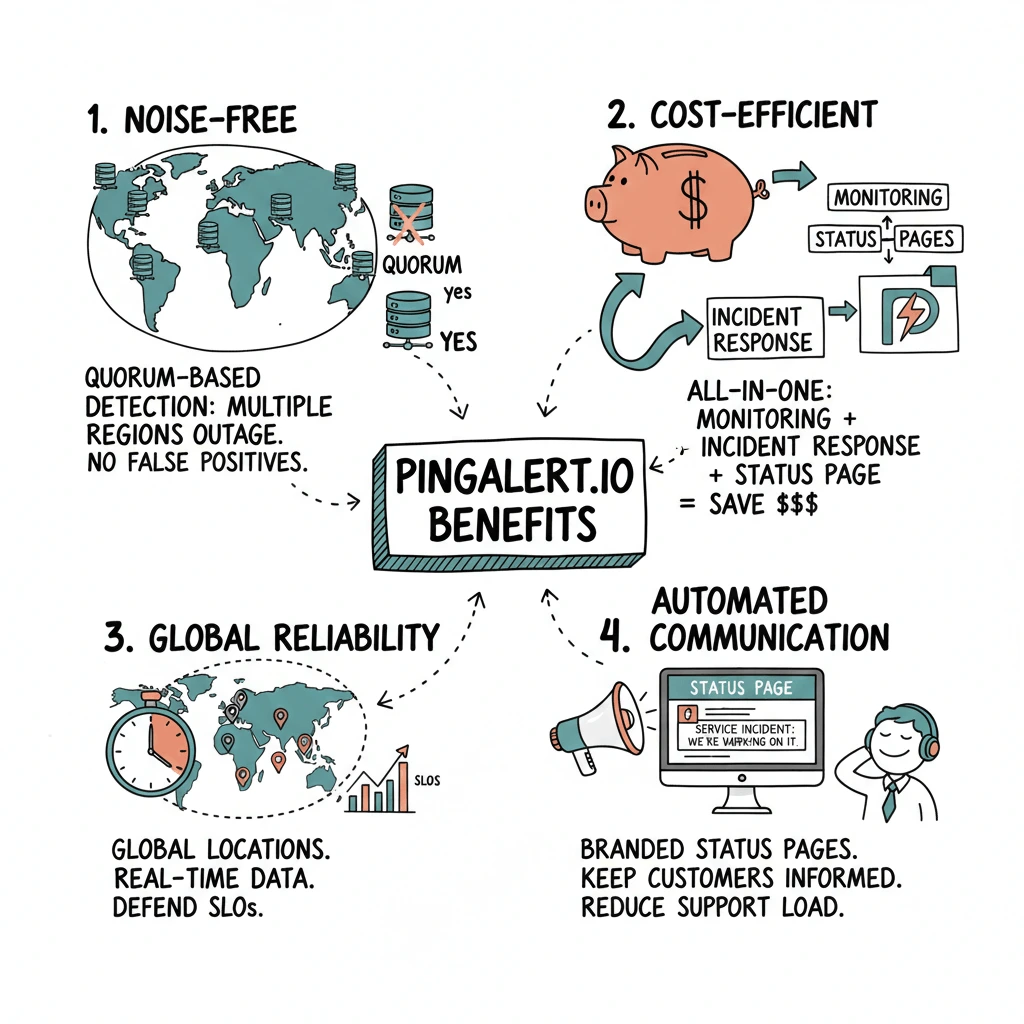
why PingAlert.io stands out.
Reader Questions, Answered
What uptime target should most SaaS teams aim for?
Most teams start with 99.9% for core services and tighten targets as operational maturity improves. The right target depends on business impact and customer expectations.
Is uptime enough, or should teams also monitor latency?
Latency should be monitored alongside uptime. A service can be technically "up" but too slow to deliver acceptable user experience.
How do status pages help during outages?
Status pages reduce uncertainty by giving customers timely, consistent updates. This lowers support ticket volume and protects trust while remediation is in progress.
Wrap Up
Maximum uptime is no longer a "nice-to-have", it's one of the most powerful (and underutilized) growth levers available to modern businesses. By choosing a purpose-built, noise-free, all-in-one solution like PingAlert.io, you can protect revenue, strengthen trust, and free your team to focus on building rather than firefighting.
Ready to make downtime a thing of the past with a calmer on-call workflow?
Related guides:
- Why uptime monitoring helps SEO
- How synthetic monitoring helps
- Status page best practices for customer trust